
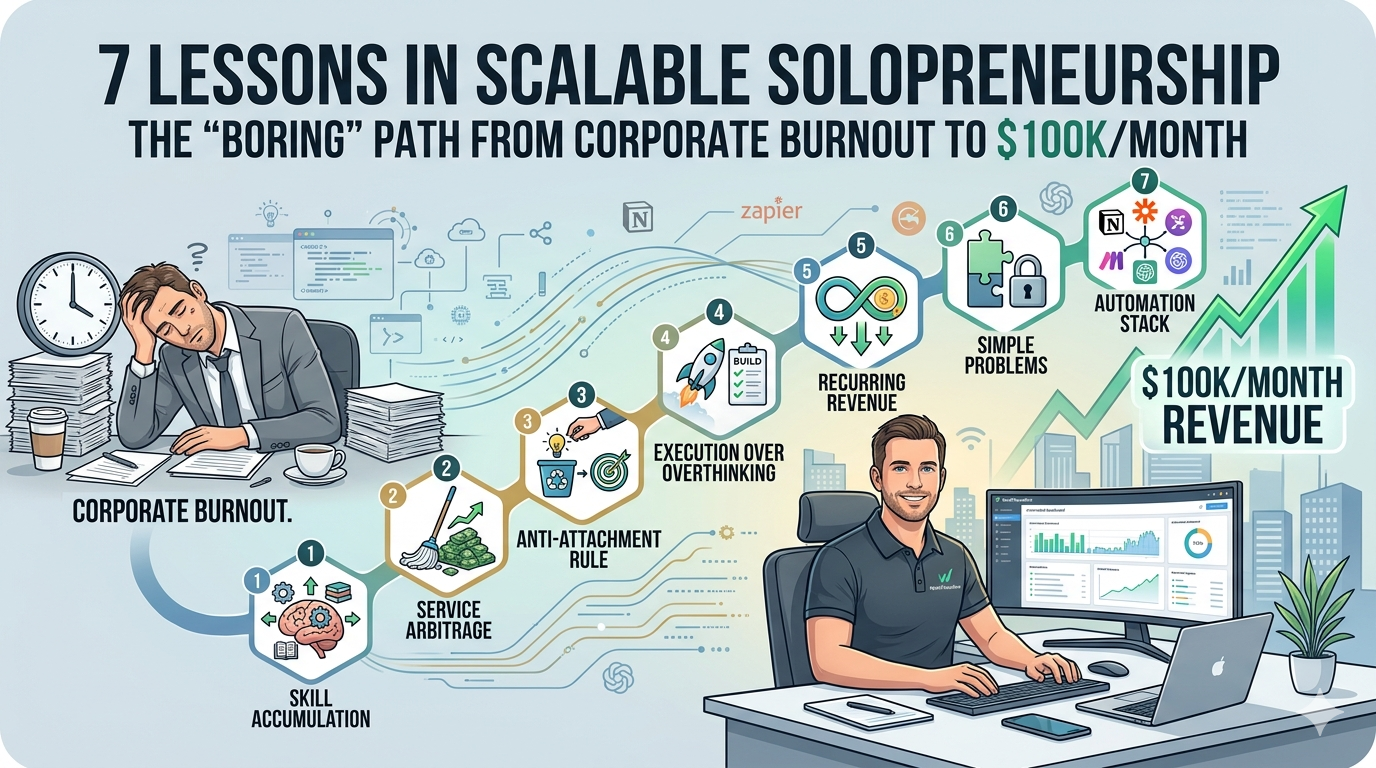
I. Introduction: Beyond the VC Myth The Power of Solving “Boring” Problems
Solopreneurship is often marketed as a high-stakes pursuit of the “Big Idea” that lightning-bolt moment of innovation that attracts venture capital and disrupts a global industry. We are conditioned to believe that starting a business solo requires a revolutionary invention or a complex proprietary algorithm. However, for the professional transitioning out of a corporate career, this “innovate or die” narrative is frequently one of the primary startup failure causes. By chasing novelty, many founders ignore the high-margin goldmine hidden in plain sight: the “boring” service sector.
The true path to a $100k/month business without a technical co-founder or VC backing isn’t found in inventing a new way to live; it is found in optimizing the way people already live. While Silicon Valley obsessively solves “first-world problems” for the 1%, the successful solopreneur looks at localized, high-demand services like home cleaning, HVAC, or specialized logistics and applies a modern architectural layer of automation.
Most experts discuss “the hustle,” but few discuss architectural arbitrage. This is the practice of taking a “messy” real-world industry and applying clean, no-code logic to it. When you digitize the customer journey of a traditional service, you aren’t just a business owner; you are a systems architect. You avoid the common cofounder conflict by replacing human management layers with robust Zapier workflows and Make scenarios.
This “boring” path is the ultimate shortcut to freedom. It allows you to build a scalable business system that operates independently of your manual labor. Instead of being a slave to a “revolutionary” product that the market might not even want, you are providing a solution to a problem that has existed for decades, powered by tools that didn’t exist five years ago. This is the essence of modern solopreneurship: high-level execution on low-complexity problems.
II. The Corporate Escape: Why Your First “Failures” are Your Greatest Assets in Solopreneurship
Solopreneurship is rarely a straight line from a corporate desk to a beachside laptop. For the majority of professionals exiting the 9-to-5 grind, the first eighteen months are often defined by what looks like a series of expensive mistakes. You might build a landing page for a consulting offer that never converts, or spend three months developing a digital product that generates zero sales. In traditional circles, these are labeled as “failed attempts.” However, if you view your transition through the lens of a systems architect, these are not failures; they are the high-interest down payments on your future automation empire.
When starting a business solo, the most dangerous trap is the pursuit of “perfect alignment.” Corporate refugees often wait for the perfect idea before they ship, fearing that a “failed” project will stain their professional reputation. In reality, the “failure phase” is your essential training ground for skill accumulation. Every dead-end project forces you to interface with the “The Four Pillars of the Stack”: SEO, sales psychology, lead generation, and technical integration.
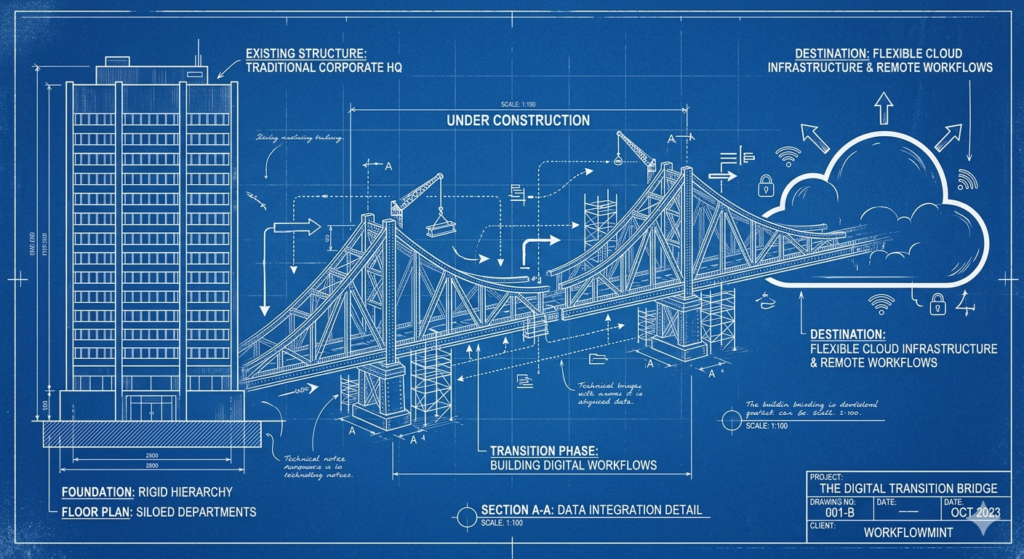
Reframing Startup Failure Causes as Data Points
Most experts cite a lack of market fit or poor cash flow as primary startup failure causes, but for the solopreneur, the real cause is often “skill gaps disguised as bad luck.” When your first project fails because nobody found your website, you are forced to learn the granular reality of SEO not the theoretical version you outsourced to an agency in your corporate life, but the hands-on mechanics of keyword intent and backlink authority.
When a deal falls through because your follow-up was slow, you don’t just lose a client; you gain the visceral understanding that manual follow-ups are a point of failure. This realization is what drives you to build your first automated CRM pipeline. You are essentially “paying” for your education with time and failed experiments rather than a $100k MBA.
Avoiding Cofounder Conflict Through Self-Sufficiency
Another often-overlooked benefit of this “messy” phase is the total elimination of future cofounder conflict. Many entrepreneurs rush into partnerships because they feel inadequate in a specific skill usually sales or technical implementation. By grinding through your initial failures alone, you build a “Generalist’s Edge.” You learn enough No-Code architecture to build your own MVPs and enough copywriting to convert cold traffic.
This self-sufficiency ensures that when you do eventually scale, you aren’t hiring out of desperation or giving away equity to solve a temporary knowledge gap. You are hiring to scale a system you already understand from the inside out. You are no longer just a “business owner”; you are the lead engineer of a revenue-generating machine.
To truly bridge the gap, you must adopt an “Anti-Fragile” mindset. If a project doesn’t gain traction within 90 days, you shouldn’t mourn it. Instead, conduct a workflow audit to see which automated parts can be salvaged and repurposed for your next “ship.” In the world of solopreneurship, the only true failure is staying stagnant. Every “failed” launch is simply a debugged version of your eventually successful $100k/month business.
III. Service Arbitrage: How Local Needs Create Global Opportunities for Solopreneurship
Solopreneurship is often misunderstood as the art of selling digital abstractions e-books, courses, or “vibe-based” coaching. While these have their place, the most explosive growth in modern starting a business solo comes from a strategy called Service Arbitrage. This isn’t just “middleman” work; it is the process of finding a local, high-friction service industry and wrapping it in a high-tech, automated user experience.
Think of industries like residential cleaning, commercial junk removal, or mobile car detailing. These are “unsexy” businesses usually run by people who are excellent at the craft but struggle with the systems. By stepping in as the architect, you solve the primary startup failure causes of the service world: poor communication, erratic scheduling, and friction-filled payments. You aren’t buying mops or trucks; you are building the digital nervous system that connects demand to supply.
Applying the “SaaS Mindset” to Physical Labor
The secret to scaling this model is treating a service business as if it were a software company. In traditional SaaS, you care about LTV (Lifetime Value), CAC (Customer Acquisition Cost), and Churn. In the arbitrage model of solopreneurship, you apply these same metrics to a cleaning route.
Instead of a “contact us for a quote” form which is where leads go to die you build a real-time booking engine. By integrating tools like Launch27 or custom Notion-based booking systems, you provide the instant gratification that modern consumers demand. You are essentially creating a “local SaaS” where the “software” is the seamless coordination of human labor.
Solving the Human Bottleneck with Automation
One of the most frequent reasons for cofounder conflict in service startups is the stress of managing people. When two founders disagree on how to handle “no-show” contractors or payroll errors, the business implodes. As a solo founder, you bypass this by using automation as your “silent partner.”
You can set up workflows where:
- A customer books a service via a Stripe-integrated portal.
- An automated SMS (via Twilio) is sent to a vetted contractor pool.
- The first contractor to claim the job is automatically sent the GPS coordinates and client notes.
- Post-service, an automated review request is triggered, boosting your local SEO.
Arbitrage as a Scalable Wealth Engine
This model allows you to leverage “Local/Service Arbitrage” to build a multi-million dollar engine. You are buying a service at a wholesale rate (the contractor’s fee) and selling it at a retail rate (the customer’s booking fee), with the “spread” being your profit.
Because you’ve automated the admin, your overhead remains razor-thin. Unlike a corporate role where you are a gear in someone else’s machine, here you own the machine. You aren’t competing with other solopreneurs in the crowded “AI Consultant” space; you are competing with local businesses that still use paper calendars. In the realm of solopreneurship, the person with the best system not necessarily the best mop wins.
IV. The “Build and Ship” Mindset: Overcoming Execution Paralysis in Solopreneurship
Solopreneurship is often strangled in its infancy by the desire for intellectual elegance. Many professionals leaving the corporate world carry a heavy burden of “procedural debt” the habit of seeking consensus, building extensive slide decks, and over-analyzing risk before a single line of value is delivered to a customer. When starting a business solo, this tendency toward over-deliberation is the silent killer. It leads to “Founder Stagnation,” where you spend six months perfecting a logo for a business that hasn’t yet validated its existence with a single dollar of revenue.
The “Build First, Overthink Later” philosophy is the only practical antidote. In a corporate environment, a mistake can be a career-ending liability; in a solo venture, a mistake is simply a data point in your debugging process. Speed to market isn’t just about beating competitors; it’s about shortening the feedback loop between your assumptions and market reality.
Shipping as a De-Risking Strategy
We often think of “shipping fast” as a risky move, but it is actually the ultimate de-risking strategy. The longer you spend building in a vacuum, the higher the “cost of being wrong” becomes. If you spend 200 hours building a Notion-based client portal before talking to a client, you’ve gambled 200 hours on a guess. If you ship a “minimum viable workflow” in 4 hours using Tally and Zapier, and it fails, you’ve only lost an afternoon.
This mindset addresses one of the most common startup failure causes: the lack of market need. By shipping early and often, you allow the market to tell you what it wants, rather than trying to manifest a need through sheer force of will. You aren’t just building a product; you are building a “market-sensing machine.”
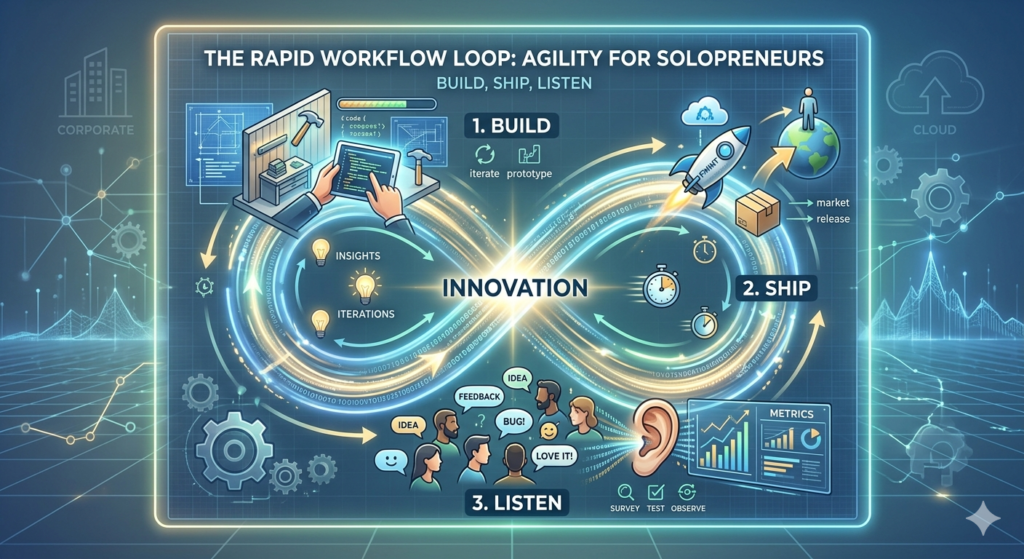
Bypassing Internal Resistance and Potential Cofounder Conflict
One of the secondary benefits of a “ship-first” culture is that it prevents the vacuum of indecision where cofounder conflict usually breeds. Even when working alone, you often have an internal conflict between your “manager self” (who wants security) and your “creator self” (who wants to build). By committing to a weekly “ship date,” you silence the internal critic.
In the industry, experts often discuss “MVP” (Minimum Viable Product), but successful solopreneurs focus on “MVS” (Minimum Viable System). This means you don’t need a custom-coded app to start. You need a way to take a payment, a way to fulfill the service, and a way to collect feedback. If you can do that with a Stripe Payment Link and a manual email, you have a business.
At WorkFlowMint, we advocate for the 1-Hour Workflow Build. This is the practice of setting a timer and forcing yourself to connect two tools that solve one specific problem. Whether it’s an automated lead responder or a simple social media scheduler, these small “ships” build the momentum required to sustain a $100k/month trajectory. Stop building for the “future” version of your company and start shipping for the reality of your current customer.
V. The Anti-Attachment Rule: Scaling Your ROI, Not Your Ego in Solopreneurship
Solopreneurship requires a psychological detachment that is rarely taught in business schools or corporate boardrooms. In a traditional career, you are rewarded for “ownership” for championing a project and seeing it through to the end, regardless of the shifting tides. However, when starting a business solo, this emotional attachment becomes a liability. The “Anti-Attachment Rule” states that your loyalty should lie with the system’s ROI, not the specific product, brand name, or niche you originally envisioned.
For many, the primary startup failure causes are not financial, but emotional. Founders often fall in love with their initial solution rather than the problem they are solving. They spend thousands of dollars on custom development for an idea the market is rejecting because they’ve tied their identity to that specific venture. To scale to a $100k/month level, you must be willing to “kill your darlings” the moment the data suggests a pivot.
Treating Your Business as a Portfolio of Experiments
The most successful practitioners of solopreneurship treat their ventures like a laboratory. Each new offer is a hypothesis, and each automated workflow is a test. If a service-based SaaS model for local landscapers isn’t gaining traction despite optimized SEO and outreach, an unattached founder doesn’t “try harder” they analyze the friction and move to the next opportunity.
This detachment is your superpower. Because you aren’t managing a board of directors or dealing with cofounder conflict, you have the unilateral power to shut down an underperforming project on a Tuesday and launch a new experiment by Thursday. You are optimizing for cash flow and time freedom, not for the pride of saying you “stuck it out” on a failing idea.
The Opportunity Cost of Sunk Costs
Industry experts often preach “grit,” but grit without direction is just stubbornness. In the world of high-leverage automation, the opportunity cost of staying with a low-margin, high-stress project is astronomical. If your current business model requires 60 hours of manual intervention a week to generate $5k, it is a “broken system,” regardless of how much you like the logo.
By adopting the Anti-Attachment Rule, you prioritize:
- Systemic Scalability: Does this model allow for automation through Make or Zapier?
- Market Pull: Is the market asking for more, or are you pushing a boulder uphill?
- Profit Velocity: How quickly does an hour of your “architectural” time turn into recurring revenue?
When you stop treating your business like your “baby” and start treating it like a machine, you gain the clarity needed to scale. You begin to look for “boring” problems with high demand and low technical resistance. This shift from ego-driven creation to ROI-driven systems architecture is what separates the struggling freelancer from the high-revenue solopreneur. Remember: the goal isn’t to be the CEO of a specific company; the goal is to be the owner of a life-supporting ecosystem.
VI. Designing for Freedom: The Logic of Recurring Revenue Systems in Solopreneurship
Solopreneurship often hits a glass ceiling when the founder remains trapped in the “project-to-project” cycle. This is the feast-or-famine trap that characterizes most freelance careers. You land a big client, work frantically to deliver, and then realize you’ve neglected your pipeline, forcing you to start the sales cycle from zero. When starting a business solo, the only way to break this cycle and achieve a $100k/month run rate is to shift your architectural focus from “delivery of work” to “delivery of access.”
This transition represents a fundamental change in how you view value. In a corporate setting, you are paid for your presence and incremental output. In high-level solopreneurship, you are paid for the consistency and reliability of a system. By moving toward a recurring revenue model whether through a “Productized Service” or a service-based SaaS you create a predictable financial floor that allows you to stop trading hours for dollars.
The Architecture of Predictability
Most discussions around recurring revenue focus on “passive income,” which is often a myth. Instead, focus on systemic predictability. One of the primary startup failure causes is the inability to forecast cash flow, leading to desperate decision-making. By implementing a subscription model, you stabilize your LTV (Lifetime Value) and can finally afford to invest in long-term SEO strategies and paid acquisition.
When you have a baseline of recurring revenue, you eliminate the underlying anxiety that often leads to cofounder conflict in larger startups. In a solo venture, this financial peace of mind is what provides the “bandwidth” to innovate. You aren’t just buying groceries; you are buying the cognitive space to work on the business rather than in it.
Productization: Turning Services into Subscriptions
To build this recurring engine, you must productize your expertise. This means defining a fixed scope, a fixed price, and a fixed delivery cadence.
- The Subscription Service: Instead of a $5,000 one-off SEO audit, offer a $1,500/month “SEO Maintenance & Growth” package.
- The “Unused Hours” Trap: Avoid selling “retainers” based on hours. Sell results. If your automation stack allows you to deliver a month’s worth of value in five hours of oversight, you shouldn’t be penalized with a lower fee.
- The Technical Bridge: Use tools like Stripe Billing or Chargebee to automate the invoicing, dunning (failed payment recovery), and upgrades.
By removing the “manual ask” for money every month, you remove the friction that causes churn. Your clients stop seeing you as a variable expense and start seeing you as a fixed utility like electricity or internet. This is the ultimate goal of solopreneurship: to become a structural necessity in your client’s world, powered by a machine that runs while you sleep.
VI. Designing for Freedom: The Logic of Recurring Revenue Systems in Solopreneurship
Solopreneurship often hits a glass ceiling when the founder remains trapped in the “project-to-project” cycle. This is the feast-or-famine trap that characterizes most freelance careers. You land a big client, work frantically to deliver, and then realize you’ve neglected your pipeline, forcing you to start the sales cycle from zero. When starting a business solo, the only way to break this cycle and achieve a $100k/month run rate is to shift your architectural focus from “delivery of work” to “delivery of access.”
This transition represents a fundamental change in how you view value. In a corporate setting, you are paid for your presence and incremental output. In high-level solopreneurship, you are paid for the consistency and reliability of a system. By moving toward a recurring revenue model whether through a “Productized Service” or a service-based SaaS you create a predictable financial floor that allows you to stop trading hours for dollars.
The Architecture of Predictability
Most discussions around recurring revenue focus on “passive income,” which is often a myth. Instead, focus on systemic predictability. One of the primary startup failure causes is the inability to forecast cash flow, leading to desperate decision-making. By implementing a subscription model, you stabilize your LTV (Lifetime Value) and can finally afford to invest in long-term SEO strategies and paid acquisition.
When you have a baseline of recurring revenue, you eliminate the underlying anxiety that often leads to cofounder conflict in larger startups. In a solo venture, this financial peace of mind is what provides the “bandwidth” to innovate. You aren’t just buying groceries; you are buying the cognitive space to work on the business rather than in it.
Productization: Turning Services into Subscriptions
To build this recurring engine, you must productize your expertise. This means defining a fixed scope, a fixed price, and a fixed delivery cadence.
- The Subscription Service: Instead of a $5,000 one-off SEO audit, offer a $1,500/month “SEO Maintenance & Growth” package.
- The “Unused Hours” Trap: Avoid selling “retainers” based on hours. Sell results. If your automation stack allows you to deliver a month’s worth of value in five hours of oversight, you shouldn’t be penalized with a lower fee.
- The Technical Bridge: Use tools like Stripe Billing or Chargebee to automate the invoicing, dunning (failed payment recovery), and upgrades.
By removing the “manual ask” for money every month, you remove the friction that causes churn. Your clients stop seeing you as a variable expense and start seeing you as a fixed utility like electricity or internet. This is the ultimate goal of solopreneurship: to become a structural necessity in your client’s world, powered by a machine that runs while you sleep.
VIII. Conclusion: Your Next Ship is Your Best Ship in Solopreneurship
Solopreneurship is ultimately a game of staying in the arena long enough for your systems to catch up with your ambitions. As we have explored, the transition from a corporate specialist to a high-revenue founder isn’t about finding a singular “gold mine” idea; it is about becoming a gold miner who uses high-powered, automated machinery instead of a shovel. When starting a business solo, the greatest risk you face isn’t market volatility or competition it is the internal stagnation caused by over-valuing your current project at the expense of your long-term evolution.
The “Boring Path” to $100k a month is paved with simple solutions to persistent problems. While others are paralyzed by the fear of common startup failure causes like lack of funding or technical debt, the successful solopreneur is busy shipping their next iteration. They understand that every version of their business is just a prototype for the one that follows. This perspective eliminates the emotional friction that often leads to burnout or the unnecessary complexity of cofounder conflict. When you are the architect, your primary responsibility is the integrity of the design, not the sanctity of the initial sketch.
The Compound Effect of the “Boring” Path
The industry often ignores the fact that sustainable wealth is built through the compound interest of skills and systems. Every automated workflow you build today whether it’s a customer onboarding sequence or an automated lead distribution engine is a permanent asset that works for you forever. Unlike a corporate promotion, which can be taken away with a restructuring memo, your automated infrastructure is yours to keep, repurpose, and scale.
Your Action Plan: Stop Thinking, Start Shipping
To move past the “failure phase” and enter the realm of high-revenue solopreneurship, you must lower the stakes of any single “ship.” Your next launch doesn’t need to be your masterpiece; it just needs to be your next experiment.
- Identify one “boring” friction point in a high-demand service industry.
- Architect a simple, recurring solution using the WorkFlowMint framework.
- Automate the fulfillment using the “Big Three” stack (Notion, Make, Stripe).
- Ship it in 48 hours.
If it fails, you’ve gained data. If it succeeds, you’ve gained freedom. The only true failure in this journey is the decision to stop shipping. The world doesn’t need more “visionaries” stuck in the planning phase; it needs systems architects who are willing to solve unglamorous problems with glamorous efficiency.
Your next ship is your best ship because it carries with it the aggregated intelligence of every “failure” that came before it. It’s time to stop overthinking and start building the machine that will eventually buy back your time. Your journey from corporate employee to a $100k/month founder begins with the very first automated “hello world.”
Join the WorkFlowMint Community
Building a business in the world of solopreneurship can often feel like a solitary journey, but it doesn’t have to be. While the systems we build are automated, the connections we make are deeply human. At WorkFlowMint, our goal is to move you from the “admin drag” of daily operations into the high-leverage role of a systems architect.
We want to hear from you. Have you successfully navigated a corporate exit? Did you turn a “boring” local service into a recurring revenue engine? Or are you currently navigating the “failure phase” and looking for the right tools to bridge the gap?
Share your story with us:
- Comment Below: Tell us about the first “boring” problem you solved with automation.
- Join the Conversation: Follow us on our social media platforms and share your success stories or your “failed” experiments using the hashtag #WorkFlowMint.
- Get the Blueprints: If you’re ready to stop overthinking and start shipping, visit our Digital Shop for ready-to-use Notion systems and automation blueprints designed specifically for the busy solopreneur.
By sharing our experiences, we turn individual “startup failure causes” into collective wisdom. Let’s foster a supportive community where execution is celebrated over hype. Your journey to $100k/month is a marathon of small, automated wins let’s win together.